Rivers, Time, and the Endless Scroll
Some loose change about procrastination, photographs, and being in water

Time
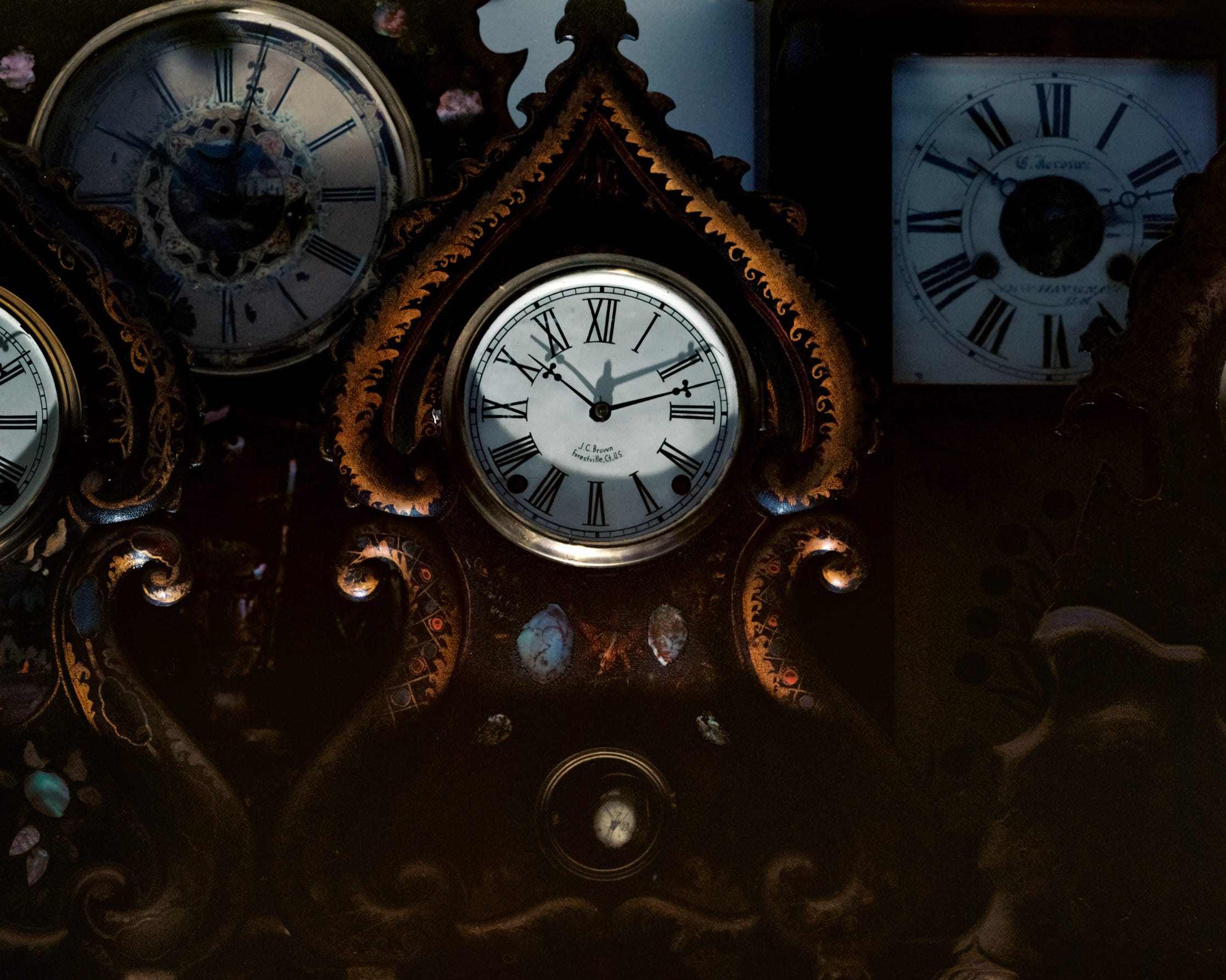
A few weeks ago as I found myself in the semi-conscious state of waking, I came into full alertness in a jolt, when I realized, horrifyingly, that the image that my unconscious served me in that precious moment was of a computer screen, with an Instagram post opening on it. This solidified my resolve to get as far away from this platform as I can in my day to day, and reserve its use for strict professional necessity. This, of course, isn’t the first time I came to this decision; I’ve tried everything you can think of to peel myself away from the death grip of these platforms. Each time, nonetheless, I find myself going back, downloading it once again because I just met someone whose work I want to see, and because I want them to see my work, stay in touch, remember I exist.
I’m not so interested in pontificating about social media’s monetization of the very fabric of out lives and its assaults on our capacity for creativity (although this is something that depresses me constantly); what I am more interested in at this moment is what this fixation and the intellectual doldrums that result from it say about our relationship to time.
A few days ago I started reading Jamieson Webster’s fantastic Disorganization and Sex. On the first page of the first chapter I came across this line that stopped me on my tracks:
“Procrastination, Lacan points out, is a kind of anal relationship to time, by which omnipotence is retained through a refusal of time” (emphasis mine)
My analyst –a Lacanian– has said something similar to me in the past; this definition is spotless, and I would add that, to me, it seems like the din of content in the endless scroll is so exhausting because it is fine-tuned to magnify the feeling that life is passing you by. Like debris in a river, fragments of others’ desires float by. These glimpses drive us to a quiet desperation and keep us trapped, picking things out of the water, throwing bits of our own things in, searching through the pieces in the hopes that something in this noxious soup will help us understand what it is that we want out of our own time.
Loss
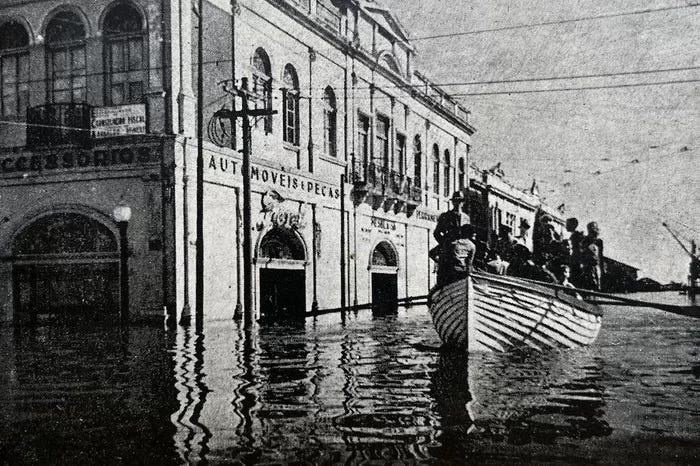
There is a bit of a flood curse that runs in my family. When I was about 9 or 10 years old, the dirty river that ran behind our family’s house flooded my grandparent’s basement for the first time. In the subsequent years, the floods only became worse; one time there were fish from the river waiting around to die in the pool and the grass was slick with fetid mud. The time after that, the fire department had to come get us out in a canoe. Years later, my maternal grandmother died, and my family eventually moved elsewhere, but the house remains there, unsellable, rife with water damage, the basement walls covered in flood marks that climb higher every time.
In the Fall of 1941, when incessant rain castigated Rio Grande do Sul for several weeks, my great-grandfather Rodolfo had his modest life savings invested in a rice field lease in Rio Pardo, on the banks of the river Jacuí –one of the Guaíba’s tributaries– a few dozen miles upstream from the capital. Before long, the river rose so high that, far downstream, the lagoon overflowed into Porto Alegre’s downtown, leaving a quarter of the city’s population displaced. In a convergence of elements that, experts say, happens once every 1,500 years (although something similar did happen again in 2024), the unusually punishing rain was met at the end of the lagoon by strong Atlantic winds and unfavorable tides, turning the Guaíba watershed into a monumental clogged bathtub for several weeks. Back in Rio Pardo, the rice had drowned. Rodolfo’s jet black hair, his wife Emma Amélia would keep recounting until the end of her life, went gray overnight. After the rice was gone, Rodolfo became a butcher.
Repression
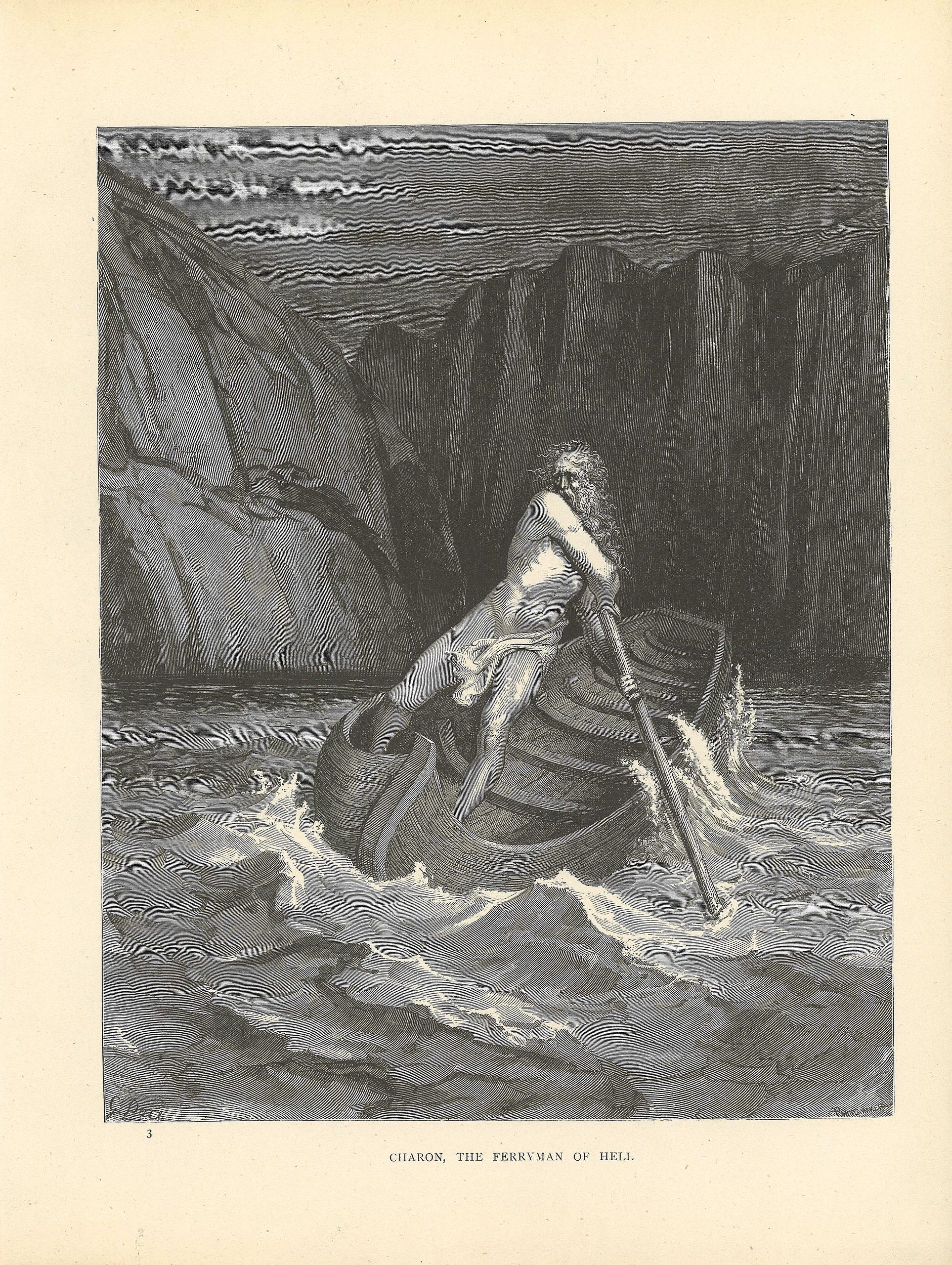
Acheron is a real river in Greece, but it is most famously one of the rivers of the Greek mythological underworld, which the souls of the deceased needed to cross in order to enter Hades. Mentions of the Acheron are plentiful in ancient literature, but the first time I came across its existence was actually because of Freud. In the first edition of The interpretation of Dreams, he greeted the reader with a quote from Virgil’s Aeneid:
“Flectere si nequeo superos, Acheronta movebo,” or:
“If I cannot move the Heavens, I shall move the powers of the underworld/the river Acheron”
Juno –Aeneas’s antagonist in his journey to avenge Troy and found what would one day become Rome– utters these words as she invokes Allecto, a Fury from Hades who goes about wreaking havoc in the Trojan army not by means of direct violence, but of disguise. One of Allecto’s crucial methods to manipulate her targets is to appear in their dreams.
In quoting Juno to set the tone for his foundational work, Freud seems to telegraph a reading of the Aeneid that inverts its original propagandistic purposes (the epic poem was, after all, commissioned by the Augustus regime). Instead of the soldiers of the ur-Empire, Freud indicates that the literary figure that most closely dialogues with his work is one who fiercely backs Carthage, Rome’s foremost enemy. Germanely, in The Interpretation of Dreams itself, Freud narrates an episode where his father, after being harassed by a gentile who knocks off his fur hat into the street, says nothing and humbly picks it up. Shortly after hearing about the incident, disappointed in his father’s meekness, young Freud began dreaming of Hannibal, the Carthaginian general who nearly destroyed Rome, and whose father had been murdered by the Romans.
There is a layer added to the dialogue between these texts by the fact that in summoning a force from the underworld, Juno invoked a river, and an underground one at that. I can’t help but believe that this was fundamental for Freud. A river is a path, not merely because of the flow of the water, but because it carves itself into the landscape, and a powerful torrent leaves behind an impression–a memory– that lasts long after it has shrunk to a trickle. It is a place of ambivalence because it is simultaneously the result of the same force being exerted on the same matter for an unimaginably long time, and a place of constant change, where going backwards is extremely costly, if not impossible. In addition to all of that, the Acheron is a place of refuse, of the incomprehensible horrors of existence –specifically, the knowledge of its finitude– that must be relegated to the underground so that the living can go on with their business, perhaps with their refusal of time. Allecto appears in Juno’s line in association with the river Acheron because her role is to punish and rectify moral crimes humans thought they had gotten away with. She brings back into the realm of the living that which was disavowed , and is thus a sort of personification of the return of the repressed.
There is a saying in Brazil that goes “money takes no insults,” and I think this is true for time as well. The more we attempt to refuse or arrest time, the more we suffer its punishments.
Bliss
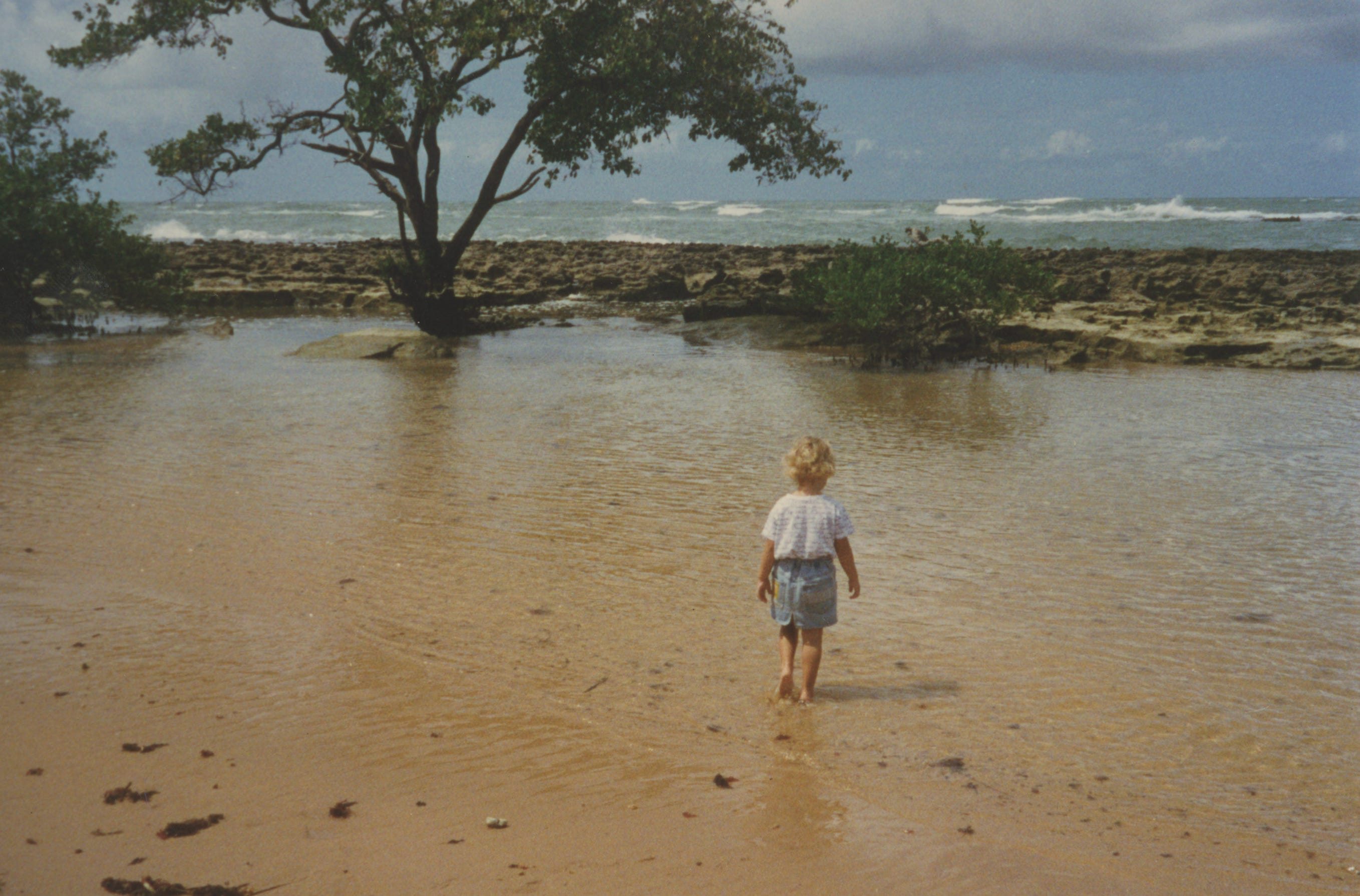
Rio Pardo’s most popular diversions in the 1940s were the beaches on the banks of the Pardo and Jacuí rivers, where Rodolfo often took Emma and the boys –Fernando and Geraldo– on the weekends. On one of these occasions, my grandfather, Fernando, then no more than a 7 or 8-year-old, was frolicking in the shallow waters when he was suddenly engulfed by a river hole.
The danger of rivers, my grandmother says, are the holes. You might be walking in shallow waters one moment and, on the next, be entirely consumed by a depression on the riverbed. When you’re drowning, she says, everything possible must be done so you don’t go underwater for a third time – at that point you’re as good as dead.
Rodolfo didn’t know how to swim, yet somehow managed to pull the boy out right before his head was submerged for the third time. From that day on, having nearly lost everything to it, Rodolfo wanted nothing more to do with the river. But as his father grew to hate it, my grandfather grew to love it. He converted the terror of this episode into a deep love for the river, and for the rest of his life, he took countless fishing trips to this very spot. The Jacuí was his pilgrimage route, and before he died, he asked that his ashes be scattered there.
There is little that gives me more pleasure than swimming in a clear river, sticking my head under the heavy, fearsome gush of a waterfall. Nearly all of my life’s favorite, most embodied memories have to do with being in the water. I think this has a lot to do with these stories, but also, nothing is more ancient and human than wanting and striving to be near running water.
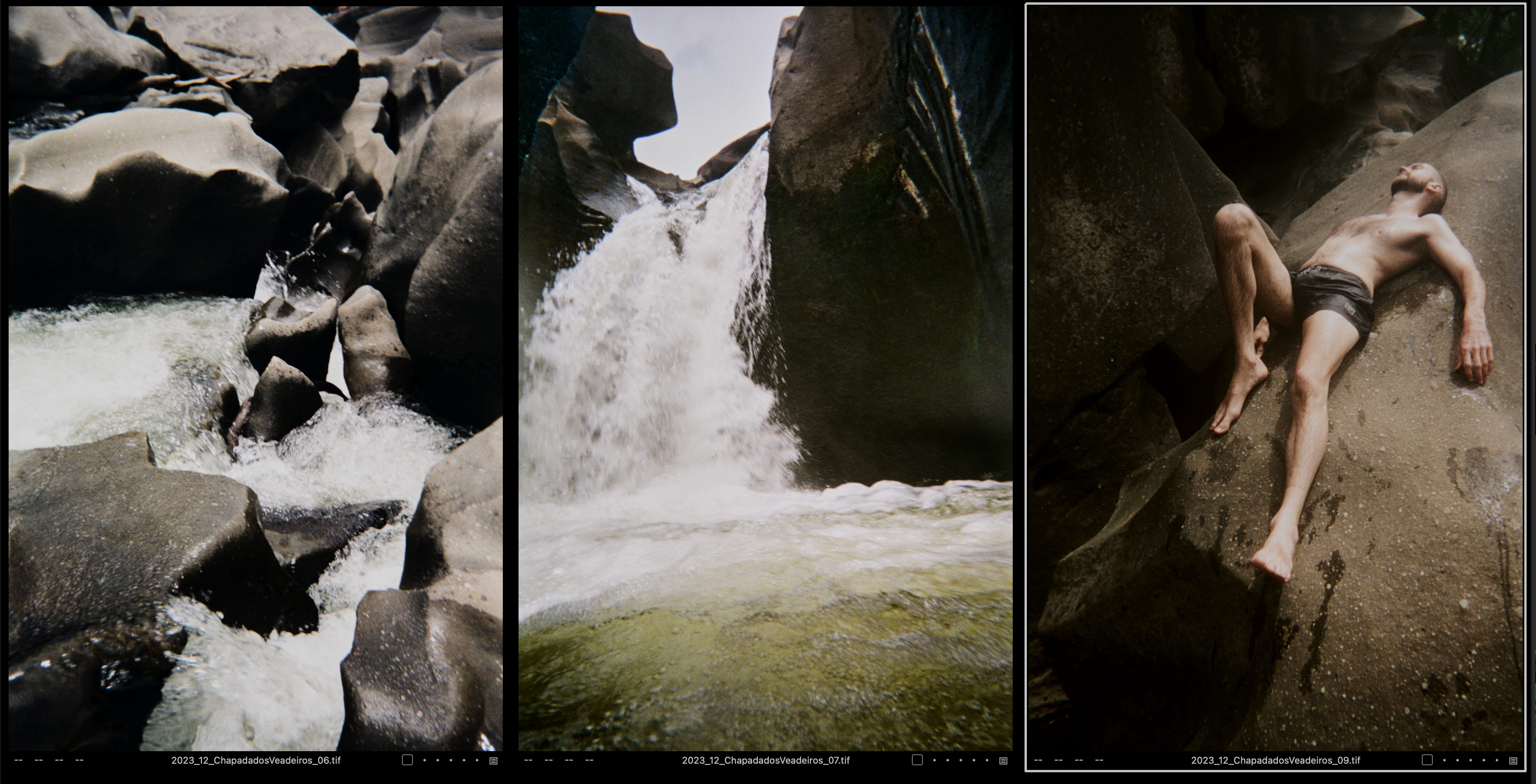
So many photographers have made books about rivers. I might do some proper research on this and write more in-depth about why the river is such a seductive subject for photography; off the top of my head I can think of Alec Soth, An-My Lê, Aaron Vincent Elkaim, Mark Ruwedel, and I’m sure I’m forgetting dozens of other artists who share this fascination (if you can think of any, let me know!). Rivers in photography are a thread through the labyrinth of the landscape, simultaneously holders and erasers of memory. I suspect the attraction they hold has something to do with the ambivalence we feel about them– the gentleness of something that could kill you in an instant is exhilarating like nothing else.
I’m sure others have said this more eloquently, but I have a sense that many photographers are melancholic people who, apart from when they have a camera in their hands, have a difficult time fully acknowledging the moment they are existing in. I count myself amongst those afflicted by this malady, and I can tell you that taking pictures is the only thing that makes it better. A photograph can never be deferred: it presents itself for a period of time and then it vanishes, as constructed as it may be. What a relief it is be invested in this and to catch one, to catch several in sequence, to be solely focused on what is in front of you. Funny how making a photograph feels like life, and looking at photographs, a stream of photographs in our 9:16 rivers of glass feels like trying to stare at the sky from the bottom of the river Acheron.
Podia ter versão em português
To mto cansada pra ler em inglês hehehehe
Eu amo seus pensamentos e como as coisas vão se conectando
Ps: tenho mto medo de rio
Our glass rivers…that is truly the best description of it for me. I think making any art at all is so much more satisfying than scrolling others and yet, and yet. I even got myself a dumb phone back in Dec. which has only resulted in my scrolling on my iPad and being largely unable to function in society w/ a “dumb phone”.